Published September 12, 2026
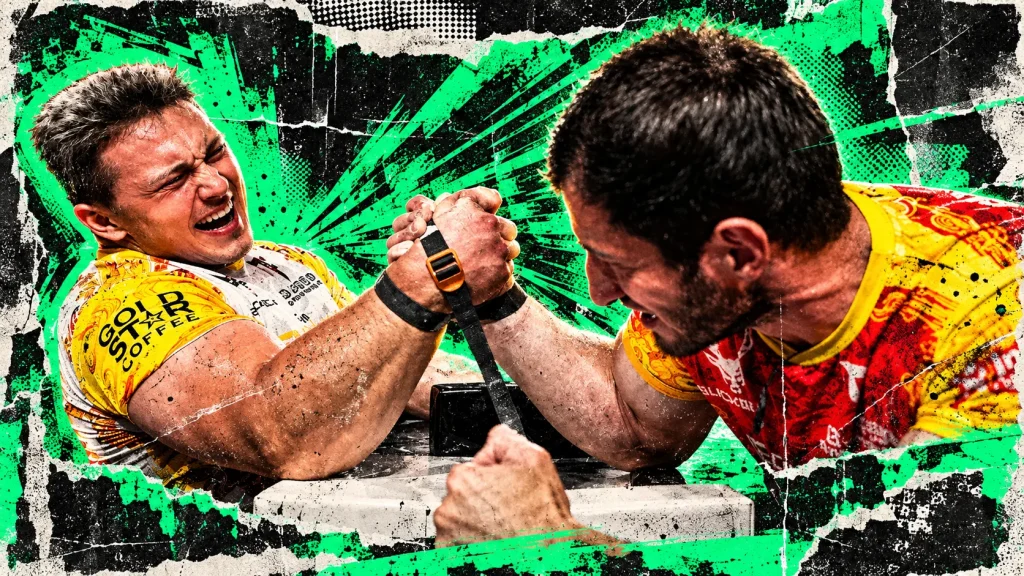
Oleg Cherkasov won the East vs West 26 lightweight title from a position that usually gets edited out of a winner’s highlight reel. His wrist was bent back, Artur Makarov had him stretched, and the strap looked far more useful to the man attacking outside.
Cherkasov stayed there anyway.
The reported 4-3 score ended on fouls after Makarov twice sent his elbow off the back of the pad while toprolling. That finish was the match. Cherkasov made Makarov’s best lane consume the table.
The Wrist Was Gone but the Drag Stayed
Round one belonged to Cherkasov inside. He reached the hook and appeared to control it cleanly. Makarov’s adjustment changed the fight. He attacked outside and opened Cherkasov’s wrist in the strap.
That was real hand control. It still needed a legal finish.
Cherkasov kept his elbow planted and pulled backward even with his palm exposed. The drag stopped Makarov from bringing the match neatly across the pin line. Every extra inch forced Makarov to keep chasing with his elbow already moving toward the rear edge.
Cherkasov protected the one base he could still use. His wrist looked beaten while his elbow kept giving him another second. Denis Cyplenkov’s patient work against Makarov in practice showed the same gap between movement and usable control.
Makarov Paid for Every Inch of Toproll
Makarov found the correct technical answer. The outside attack lengthened Cherkasov and weakened his wrist line. It also forced Makarov to decide how hard to keep pulling backward.
More back pressure opened Cherkasov further, but it also consumed pad. Backing off preserved elbow room while giving Cherkasov time to drag closer or rebuild some cup. The same problem appears whenever a puller keeps driving after the wrist opens. The hand advantage only matters while the elbow can support it.
Those two elbow fouls completed that trade. Makarov’s attack worked well enough to demand more table than he had available.
An elbow call removes a winning position and restores a setup. Our earlier look at a decisive referee dispute covered that practical cost. Pad management lives inside technique.
Cherkasov Won the Second-Best Position
The attractive version of adaptability involves switching lanes and taking over. Cherkasov’s version was rougher. He started with the better hook, lost the cleaner hand position later, and accepted a defensive shape that could still create pressure.
That takes table discipline. A bent wrist invites panic and a frantic attempt to recover everything. Cherkasov asked less from the position. Keep the elbow legal. Keep dragging. Make Makarov finish one more inch.
Makarov deserves credit for changing the match after round one. His toproll turned a one-sided inside picture into a seven-round argument. He could take Cherkasov’s wrist. He could not consistently bring that advantage to the pin pad without losing his elbow.
Cherkasov left with the title because he kept working after the pretty part of his technique disappeared. His hand bent back. His elbow stayed in competition. That was enough.

I was born in the 1980s, so like a lot of fans, Over the Top was my first introduction to pro arm wrestling. Years later, Devon Larratt’s YouTube channel pulled me back in, and I’ve been hooked ever since. Rewatching classic matches, following the modern supermatch hype, and keeping up with the personalities, rivalries, and culture that make arm wrestling so addictive.