Published August 6, 2026
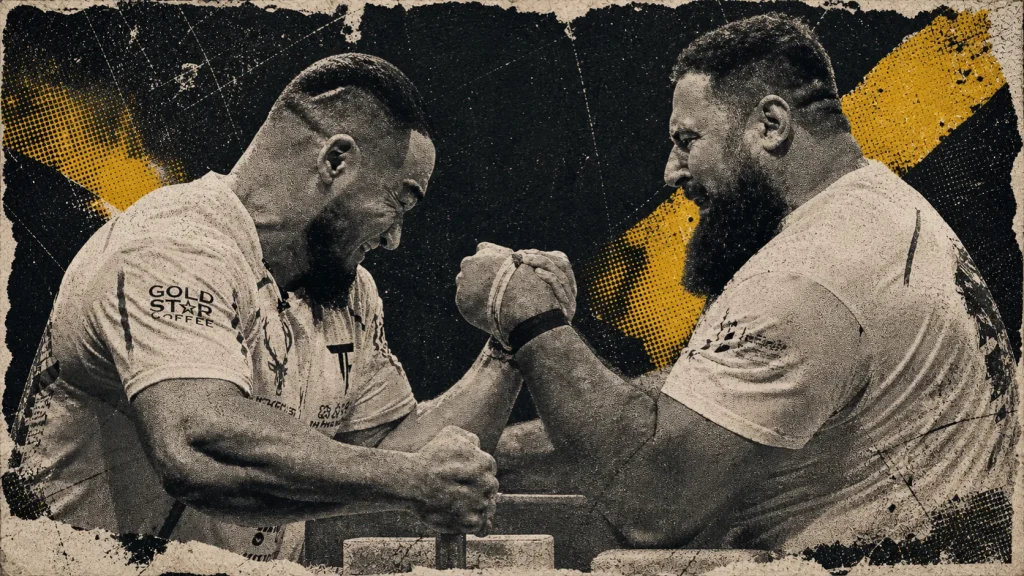
The 4–0 score makes Vitaly Laletin’s win over Alizhan Muratov look like four copies of the same flash pin. Round one tells a better story.
Vitaly took the wrist and owned the direction, yet Muratov made him surge several times before the hand finally reached the pad. The next three rounds vanished at the start. That contrast matters more than padding the challenger with a moral victory.
Muratov lost the central fight. His defensive arm still held elite super-heavyweight force after his preferred hook had gone.
Round One Was the Honest Test
A translated post-match account attributed to Vitaly describes a patient finish. He felt Muratov’s hand move, paused to read the resistance, then applied another surge.
That detail fits what the table showed. Muratov’s wrist was opened, but his elbow flexion and side connection kept the match above the pad. He could no longer drag Vitaly into the tight inside position that made him so dangerous against Artyom Morozov. He could still make the champion finish through resistance.
Our first look at the match focused on how Vitaly removed Muratov’s hook. Round one adds a useful second layer. Losing the hand ended Muratov’s attacking lane before it erased every defensive tool.
A Wrist Can Fade Fast
The later flash pins suggest that the opening exchange changed the available structure. Once a wrist gets extended under repeated load, the next setup can begin with weaker containment. The fingers open sooner. Pronation lands cleaner. The arm receives force from a worse angle.
Vitaly reportedly wondered whether Muratov felt something in the wrist. There’s no direct confirmation from Muratov, so an injury label would run ahead of the evidence. Fatigue and cumulative hand damage already explain plenty.
Vitaly once experienced a similar sequence against Levan Saginashvili in 2019. He has described losing wrist control early and feeling that position collapse more easily afterward. Elite hand pressure can turn one compromised round into a much shorter night.
The Sweep Still Belongs to Vitaly
Round-one resistance changes the texture of the win. It leaves the hierarchy alone.
Vitaly controlled every round, broke the wrist he had promised to attack, and never let Muratov build a clean inside position. That performance strengthens his claim as the strongest left arm in the sport. The champion found the same answer four times, even when the first answer needed extra pressure.
Muratov’s takeaway feels narrower. His defensive strength belongs at this level. His offense needs another route when a taller top roller keeps his palm open. More side pressure cannot rescue a cup that has already disappeared.
Vitaly’s own right-arm fight with Devon Larratt showed how much a long round can reveal inside a decisive result. Batumi offered the inverse. One stubborn opening round exposed Muratov’s strength, then three fast pins exposed the limit of fighting without his wrist.

I was born in the 1980s, so like a lot of fans, Over the Top was my first introduction to pro arm wrestling. Years later, Devon Larratt’s YouTube channel pulled me back in, and I’ve been hooked ever since. Rewatching classic matches, following the modern supermatch hype, and keeping up with the personalities, rivalries, and culture that make arm wrestling so addictive.