Published Aug 6, 2026
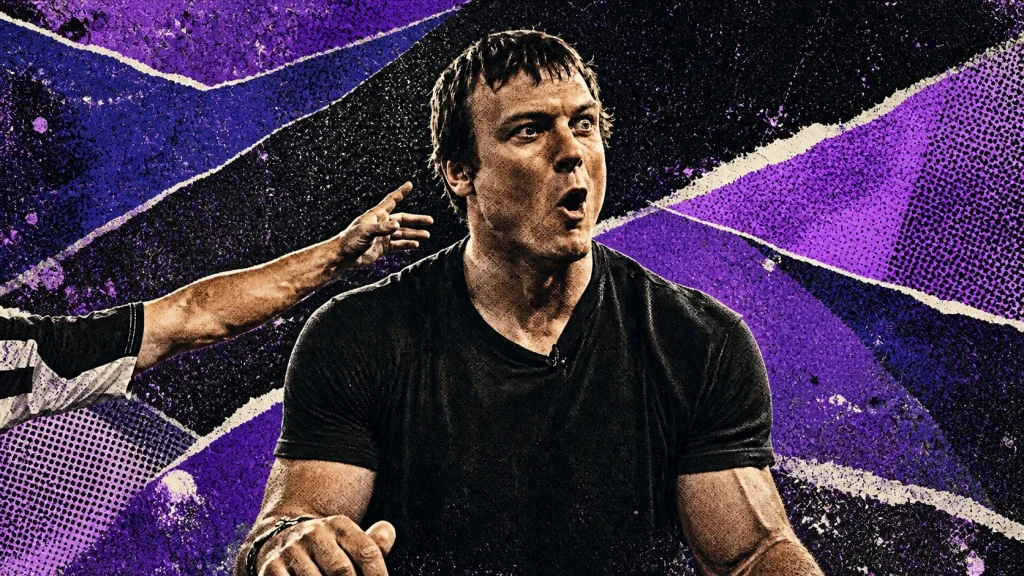
Devon Larratt’s move outside is often presented as a clever tactical choice. The harder truth is that his body narrowed the choice first.
Years of armwrestling left both elbows dealing with osteoarthritis, extra bone growth, loose fragments, inflammation, and reduced range of motion. Arthroscopic procedures removed damaged material and helped restore function. Recovery also forced Devon to reconsider which positions could carry an elite match.
The hook that once organized his game could no longer bear the same workload. His answer was a full redistribution of pressure.
The Old Inside Chain Lost Its Reliability
Early Devon was an inside puller first. He wanted cup, shoulder connection, and side pressure working together. That system depended on confidence near the elbow’s tighter angles.
After accumulated damage and surgery, the former inside lane felt weaker. Public medical reporting supports the diagnosis, procedures, and rehabilitation. It does not establish that surgery permanently destabilized the joint, so the technical conclusion needs careful wording.
Devon’s own competitive response provides the clearer evidence. He stopped asking the rebuilt elbow to win through the same closed position and began creating distance through pronation and back pressure.
That shift changed where the match could be controlled. Instead of forcing the opponent into his shoulder, Devon could lengthen the arm, climb through the hand, and use the strap to keep rotation alive.
The Outside Game Spread the Load
An outside structure gave Devon more room to manage force. Rising pressure threatened the fingers. Pronation resisted being turned palm-up. Back pressure kept his hand connected to his body while the arm angle opened.
The pieces supported one another. A lost wrist did not automatically erase pronation. A retreat from center could still preserve tension through the strap. Endurance became more valuable because the outside position gave Devon a place to spend it.
The reinvention also created the version of Devon who could make opponents finish repeatedly. That broader pattern helps explain why Devon keeps getting stronger even as his competitive mileage grows. Strength gains matter most when the style gives them a usable lane.
Reinvention Preserved His Table Intelligence
The elbow damage took away a dependable first option. It never removed Devon’s ability to read a match.
He still understood cup, shoulder position, and side pressure from the inside years. The outside rebuild let him apply that knowledge from farther away. He could feel when an opponent’s wrist softened, when a press was forming, and when the match could return toward center.
That history complicates any simple argument about Devon and the aging problem. The damage was real. So was the adaptation.
Devon’s later style became effective because it respected the new limits while exploiting the skills that survived them. The elbow changed the route. It also forced him to build a game with more exits.

I was born in the 1980s, so like a lot of fans, Over the Top was my first introduction to pro arm wrestling. Years later, Devon Larratt’s YouTube channel pulled me back in, and I’ve been hooked ever since. Rewatching classic matches, following the modern supermatch hype, and keeping up with the personalities, rivalries, and culture that make arm wrestling so addictive.